

Amsterdam is not just a modern European capital—it is a place where history is visible in everyday life. Many Amsterdam landmarks are still part of the active city centre, allowing visitors to walk through centuries of Dutch history in just a few streets.
People usually search for historical places in Amsterdam because they want to understand how the city developed, from a small settlement where Amsterdam started in the Middle Ages to a global cultural hub in Europe.
What makes Amsterdam unique is how its historical sites are not isolated museums. Instead, they are located within daily life—next to canals, near central station, and among beautiful buildings with stunning architecture.
Exploring these places gives a unique perspective and helps you gain insight into the city’s social, cultural, and political past.Below are some of the most important historical places that reflect Amsterdam’s past, beauty, and identity.
Table of Contents
ToggleTop 10 Historical Places in Amsterdam to Visit
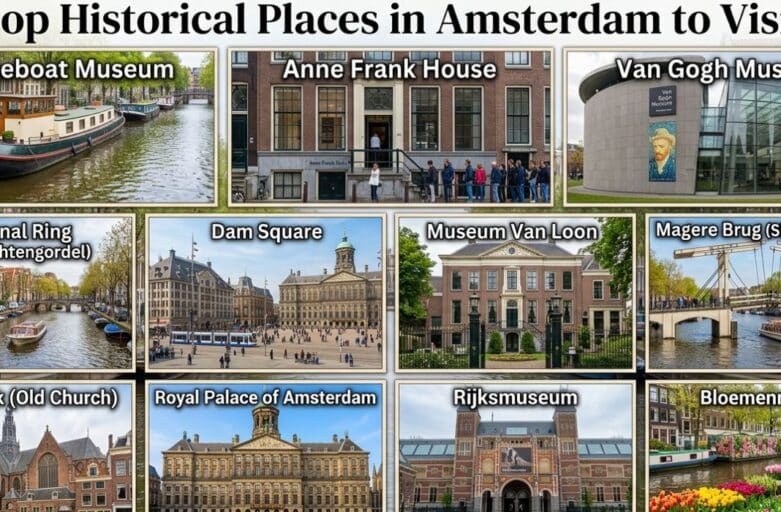
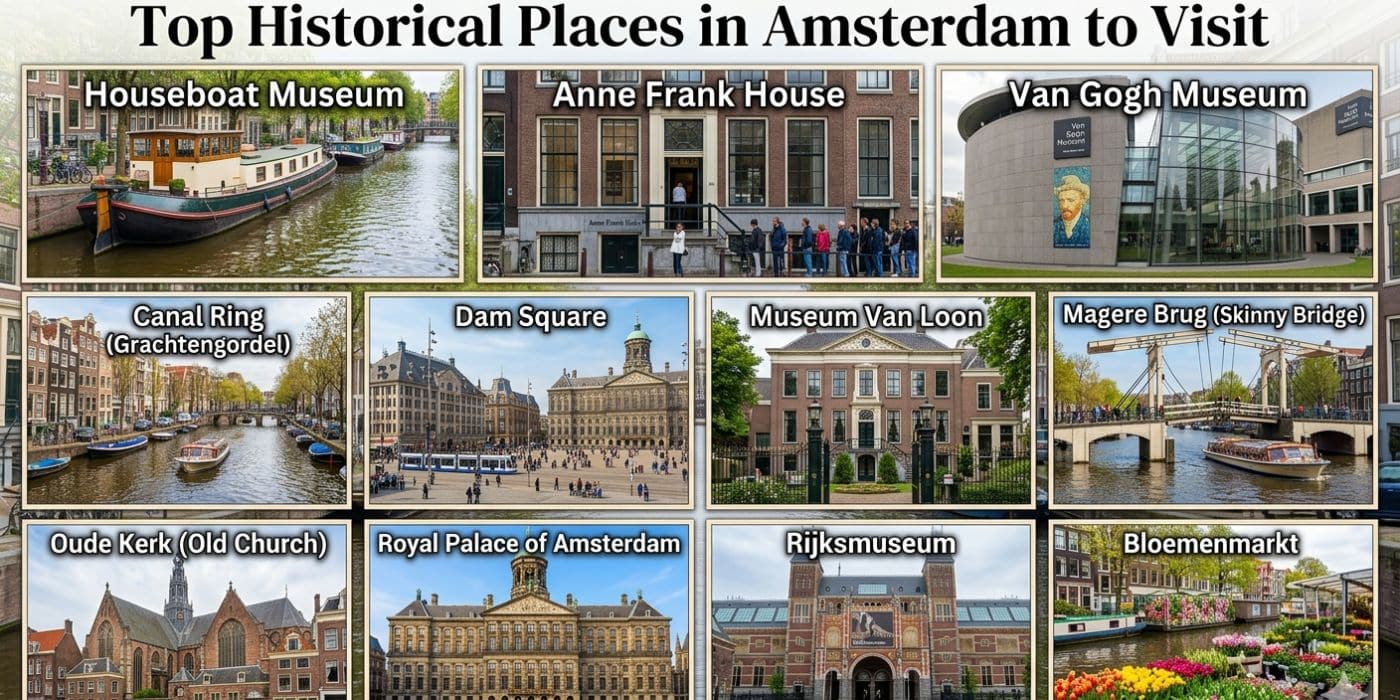
Here we are listing more than 10 top historic places in Amsterdam to visit , perfect for the whole family.
Houseboat Museum
Anne Frank House
Van Gogh museum
Canal Ring (Grachtengordel)
Dam Square
Museum Van Loon
Magere Brug (Skinny Bridge) in Amsterdam
Oude Kerk (Old Church)
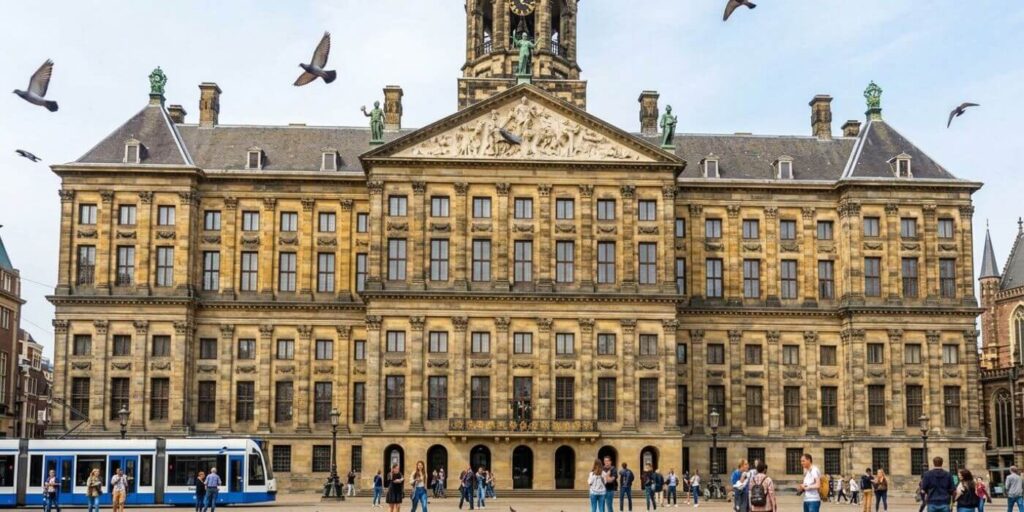
Royal Palace of Amsterdam
Rijksmuseum
Bloemenmarkt
What is the Houseboat Museum about?
The Houseboat Museum is Amsterdam’s only floating canal museum (Woonbootmuseum or Grachtenmuseum), moored right on the Prinsengracht in the Jordaan district. Vincent van Loon founded the Amsterdam Boat Museum of Canals in 1996.
You step aboard a real historic houseboat and experience exactly what it feels like to live on the water. The boat is called Hendrika Maria. It was built in 1914 as a working freight barge/cargo ship in North Holland and used in Rotterdam harbour. It’s just a 5-minute walk from the Anne Frank House and near the Van Gogh Museum.
What is the history of houseboats?
Houseboats have traditionally been linked to water in the Netherlands, where people have resided on or near water-focused areas due to the country’s geography and trading history. Early records reveal individuals living on boats in Amsterdam as early as 1652, including traders and poorer citizens who used boats for shelter.
Is a houseboat worth visiting?
Absolutely — especially the Houseboat Museum in Amsterdam. It’s one of the most extraordinary experiences on the city tour. Step aboard a real historic houseboat, walk through lived-in spaces, and understand daily life on the water (the kitchen, bedrooms, and how utilities work).
They have self-guided tours with audio in multiple languages. The Houseboat Museum has air conditioning for when it’s hot outside! And warm when it’s cold outside. The museum shop offers maritime goods collection, popular souvenirs, and books about houseboat history. Photography is allowed onboard.
You can visit the houseboat any day between 10:00 and 17:00 (GMT+1). Ticket price: 9.5 EUR for adults, 5 EUR for children and young people under 12. They have a special offer for the morning entry fee of 8 EUR each. You can book the ticket online to visit Amsterdam’s famous landmarks.
A Relaxing Historic Canal Journey on Historic Boats
A Relaxing Historic Canal Journey on Historic Boats offers a serene escape through Amsterdam’s iconic waterways aboard traditional or historic vessels, blending luxury, freedom, and the perfect way to discover and explore the city’s rich history.
The famous canal rings (Grachtengordel) are the concentric semicircles of 17th-century canals—Singel, Herengracht, Keizersgracht, and Prinsengracht—built during the Dutch Golden Age as a masterpiece of urban planning.
The Canal Ring is a UNESCO World Heritage site. Prinsengracht stands out as one of the most famous canals, lined with elegant houses, national monuments, houseboats, and landmarks. The most beautiful canal walk is often along the charming Brouwersgracht or the grand Golden Bend on Herengracht.
Amsterdam canal trips are absolutely worth it, offering views of historic architecture, amstel river, bridges, and hidden neighborhoods in a relaxing way, especially on smaller, historic-style, or premium boats.
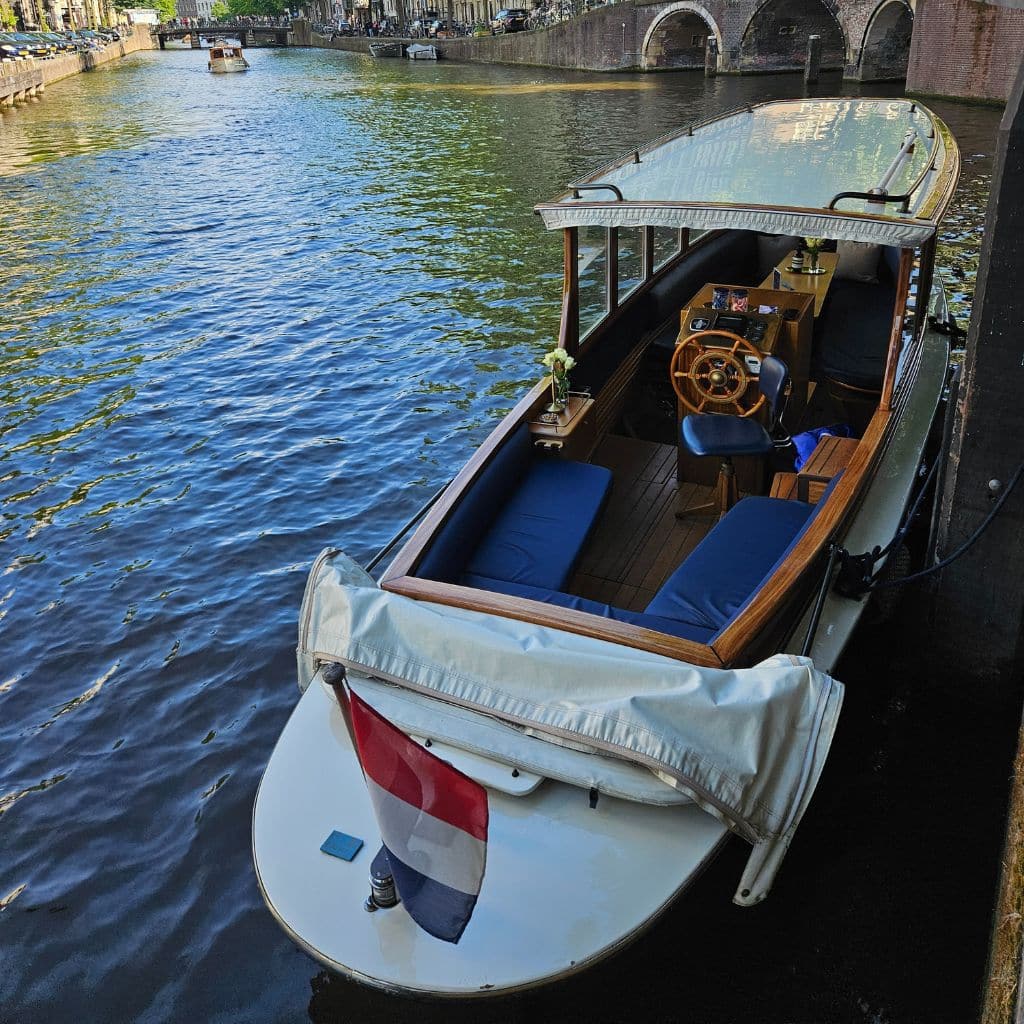
Historic Boat Undine from 1920
The Undine is a remarkable piece of European maritime heritage, originally built in 1920 in Berlin. This classic vessel was not just a leisure boat—it served a functional role as a passenger ferry between East and West Berlin, making it a witness to an important period in European history.
In 2019, the Undine was transported from Berlin to Amsterdam, where it underwent a full restoration and modernization, including conversion to a silent, eco-friendly electric engine—blending heritage with sustainability.
Key Features:
Up to 8 persons
Semi-covered with an open sundeck for summer views
Fully heated interior for winter cruises
Quiet, eco-friendly cruising experience
Selection of wines, champagne, beer, and soft drinks collection
Breakfast, lunch, dinner, or private catering onboard up to 5 people

Ritz Dutch Classic Wooden Saloon Boat from 1915
The Ritz Saloon Boat, built in 1915, represents the elegance and craftsmanship of early 20th-century Dutch boat design. Constructed with rich mahogany wood interiors, the boat reflects the luxury and style of Amsterdam’s golden era of canal cruising. Ritz has been carefully preserved and maintained to ensure its historical significance.
Key Features:
Up to 12 persons
Elegant mahogany wood finish
Marble countertop with a premium drinks collection
Onboard toilet
Flexible Layout: Open the rear section and the covered roof for all-weather cruising
Catering options (breakfast, lunch, dinner, high tea)
Historic Highlights of the Netherlands
The Rembrandt House Museum is where the famous painter Rembrandt van Rijn lived and worked.
The Royal Palace, built in the 17th century, serves as the official residence of the Dutch royal family during state visits.
The Oude Kerk, dating back to about 1250, is the oldest church and the oldest building in Amsterdam.
Museum Van Loon is a canal house dating back to the late 17th century, turned into a museum in 1974.
The Beurs van Berlage was designed by architect Hendrik Petrus Berlage and built between 1896 and 1903.
The Oost-Indisch Huis, dating back to 1606, was the headquarters of the Vereenigde Oostindische Compagnie (V.O.C.), the world’s first multinational corporation.
The Portuguese Synagogue, completed in 1675, was the largest synagogue of its time and is located in Amsterdam’s Jewish Quarter.
The Centraal Station was built between 1881 and 1889 on three artificial islands supported by wooden pillars.
The De Waag, built in 1488, is the oldest standing non-religious building in Amsterdam.
The “hidden” Catholic church is located at Oudezijds Voorburgwal 40.
A 17th-century canal house contains a secret “attic church” built for clandestine Catholic worship.
Public Catholic worship was banned, leading to the construction of a secret church in the attic of a canal house.
The Royal Palace in Amsterdam was originally built as the city hall and later converted into a royal residence.
The Portuguese Synagogue is one of the most important legacies of the vibrant Jewish community in Amsterdam.
Amsterdam’s canals are recognized as UNESCO World Heritage Sites due to their historical significance.
Amsterdam became a sanctuary for Jewish families fleeing the Inquisition.
The Oude Kerk is the oldest building in Amsterdam, dating back to the 13th century.
The National Monument in Dam Square commemorates the victims of World War II and symbolizes peace and tolerance in Amsterdam.
The Royal Palace in Amsterdam was originally built as a city hall and later converted into a royal residence in 1808.
The Rijksmuseum showcases an extensive collection of Dutch art and history, including works by Rembrandt and Vermeer.
Amsterdam’s canals are recognized as UNESCO World Heritage Sites due to their historical significance and unique architecture.
Centraal Station is one of the busiest transportation hubs in the Netherlands and features impressive neoclassical architecture.
The Old Church, or Oude Kerk, is the oldest building in Amsterdam, dating back to the 13th century.
The Anne Frank House preserves the secret annex where Anne Frank and her family hid during World War II.
The Skinny Bridge, or Magere Brug, is a famous drawbridge in Amsterdam that connects the banks of the Amstel River.
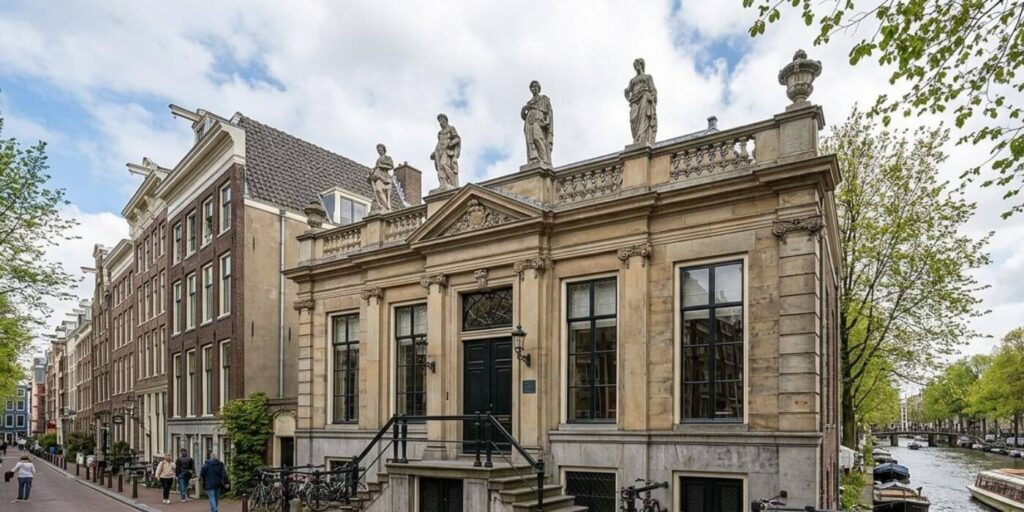
Museum Van Loon
Museum Van Loon is one of the best-preserved canal houses in central Amsterdam, offering a realistic look at how wealthy families lived during the Dutch Golden Age. Museum Van Loon is a canal house museum that showcases the life of the Amsterdam elite in the 17th century.
Built in the 17th century, the house belonged to the Van Loon family, who were closely connected to the founding of the Dutch East India Company. Walking through the rooms reveals an extensive collection of historical furniture, portraits, and artifacts, all carefully maintained to reflect the lifestyle of Amsterdam’s elite.
The house itself is a fine example of beautiful architecture, with symmetrical design, high ceilings, and a formal garden at the back. Unlike large museums, this site feels personal—it allows visitors to understand daily life rather than just major events.
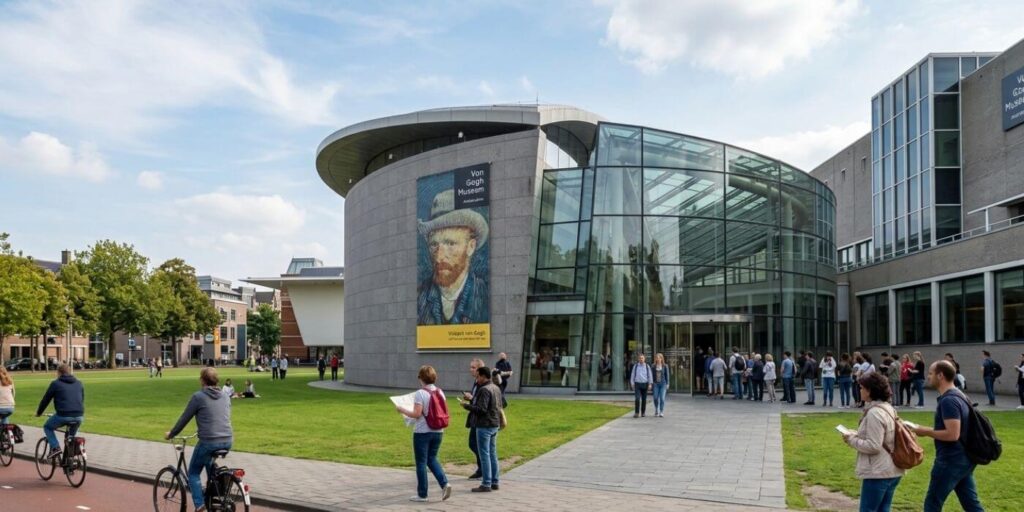
Van Gogh Museum
The Van Gogh Museum is not just about paintings—it provides historical context about life in 19th-century Europe. The museum holds a collection of works by Vincent van Gogh, along with letters that reveal his thoughts and struggles.
Although it is a modern building, it stands among Amsterdam’s important landmarks and reflects the city’s preservation of its artistic heritage. The museum shows how art connects with history, particularly during a period of rapid change in Europe. For many, this is one of the famous landmarks that connects emotional human stories with historical development.
Anne Frank House
The Anne Frank Museum is one of the most significant historical sites in Amsterdam, connected to World War II. This building is where Anne Frank and her family hid during the Nazi occupation. The preserved rooms offer a direct, realistic view of life at that time. It is considered a national monument because of its importance in remembering history.
Unlike traditional museums, this site focuses on human experience. It allows visitors to reflect on themes of fear, hope, and resilience. The space’s simplicity contrasts with its deep historical meaning. It is a place many say you should not miss, as it provides a powerful connection to the past and the realities of war in Europe.
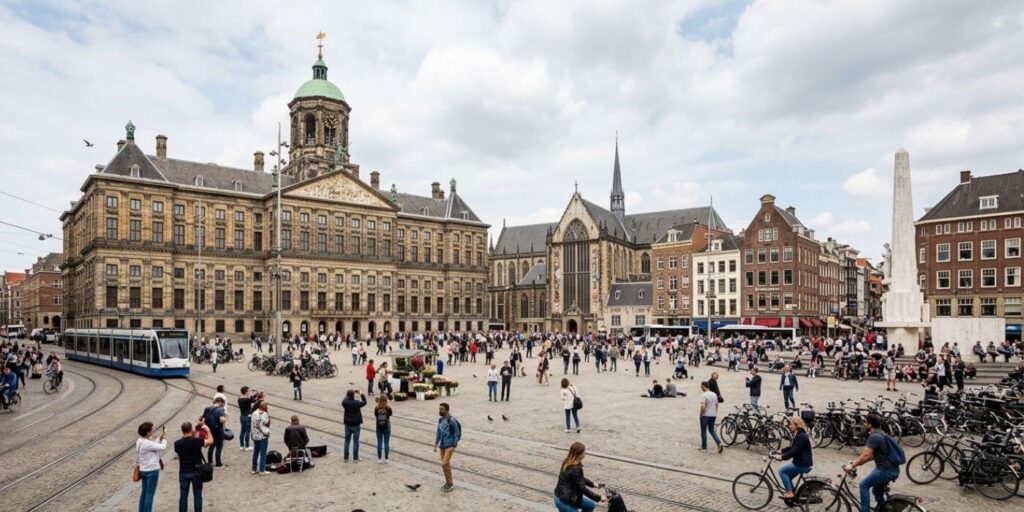
Dam Square
Dam Square is located in the middle of city and has been central to Amsterdam since the 13th century, when a dam was built on the Amstel River—this is where Amsterdam started. Today, it remains one of the most recognizable Amsterdam landmarks, surrounded by famous landmarks and beautiful buildings. Historically, it was a place for markets, public gatherings, and important events.
Its center stands the National Monument, an imposing structure built to commemorate the victims of World War II. Dam Square is both a social space and a place of remembrance. Dam Square offers amazing views of the surrounding architecture and provides a clear sense of how the city evolved.
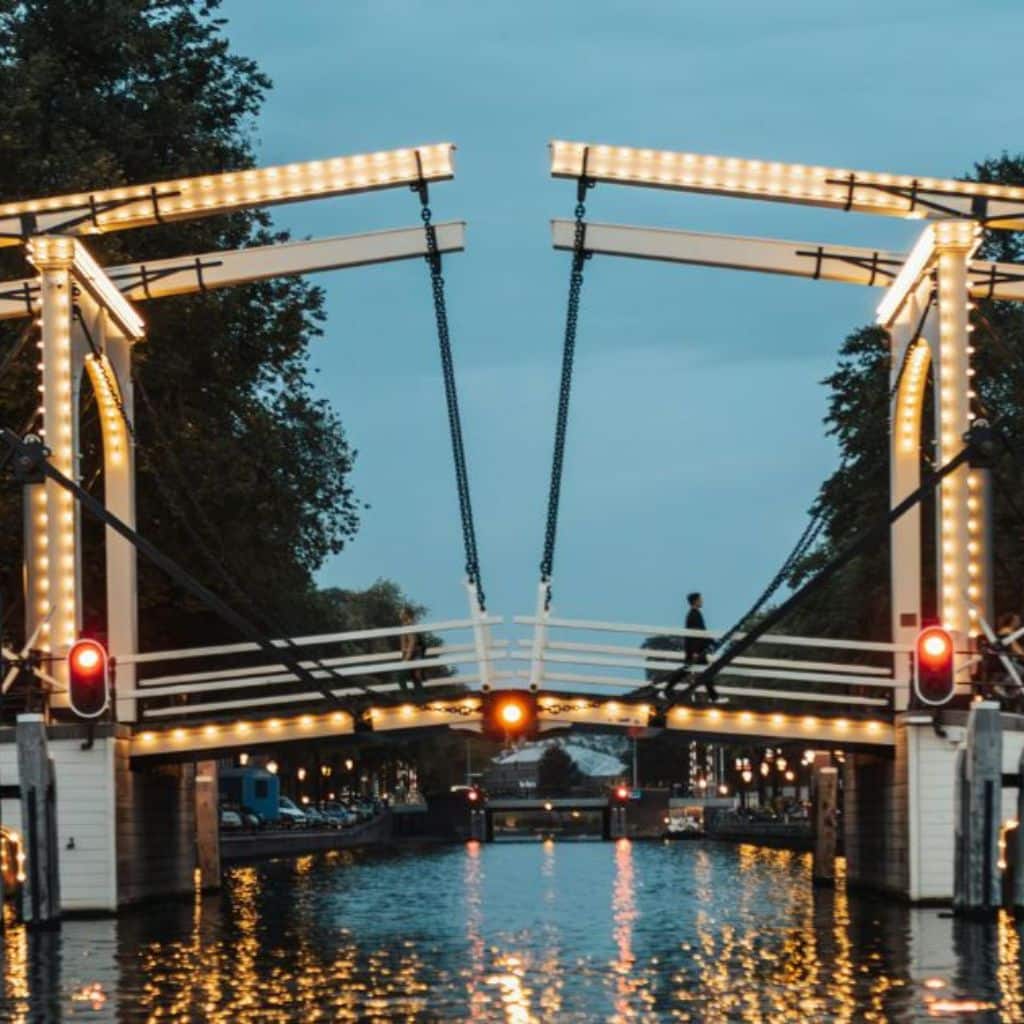
Magere Brug (Skinny Bridge) in Amsterdam
The Magere Brug, or Skinny Bridge, is one of the most photographed bridges in Amsterdam. Dating back to the 17th century, it reflects the city’s long relationship with water and canal infrastructure. Originally a narrow wooden bridge, it has been rebuilt over time but still retains its historic character.
Located along the Amstel River, it offers amazing views of the surrounding canals and beautiful buildings. This bridge is a simple yet meaningful part of Amsterdam’s historical sites, showing how everyday structures contribute to the identity of the city centre.
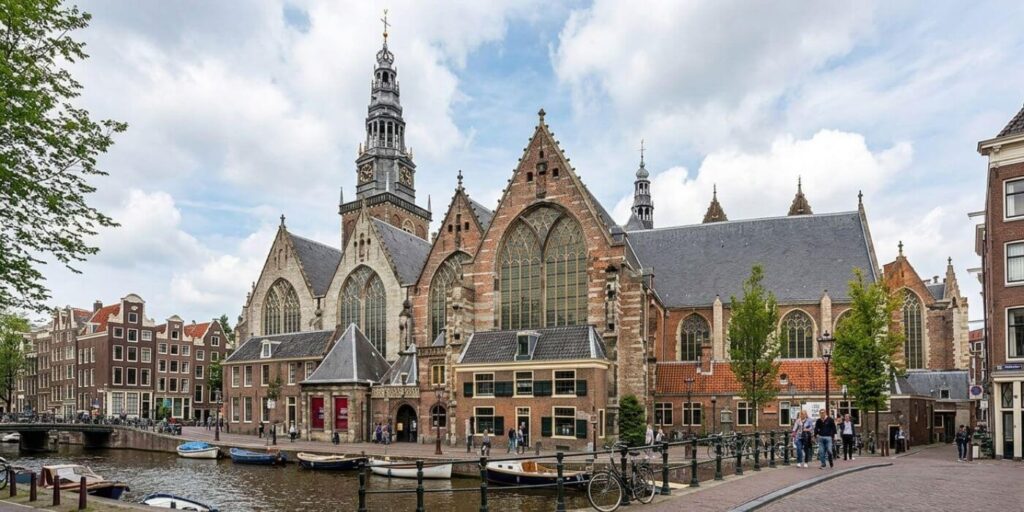
Oude Kerk (Old Church)
The Oude Kerk is widely known as the oldest building in Amsterdam, with origins dating back to the early 14th century. Situated in the Red Light District, it stands in contrast to its surroundings, offering a sense of peace and reflection. This church represents the religious history of the Middle Ages, when it served as a central place of worship. Its interior features wooden ceilings, old gravestones, and historic artwork.
Royal Palace of Amsterdam
The Royal Palace of Amsterdam, located in Dam Square, was originally built as a city hall in the 17th century. It is one of the most imposing structures in the city and reflects the political and economic strength of Amsterdam during the Dutch Golden Age. King Willem-Alexander, Queen Máxima, and their family live at Huis ten Bosch Palace in the Hague.
The building’s architecture includes grand halls, marble floors, and detailed sculptures, all designed to show power and order. Today, it is still used for official events, connecting the past with the present. As one of the key Amsterdam landmarks, it highlights the city centre’s administrative and royal stories.
Join Kings Day Celebration In Amsterdam
Rijksmuseum
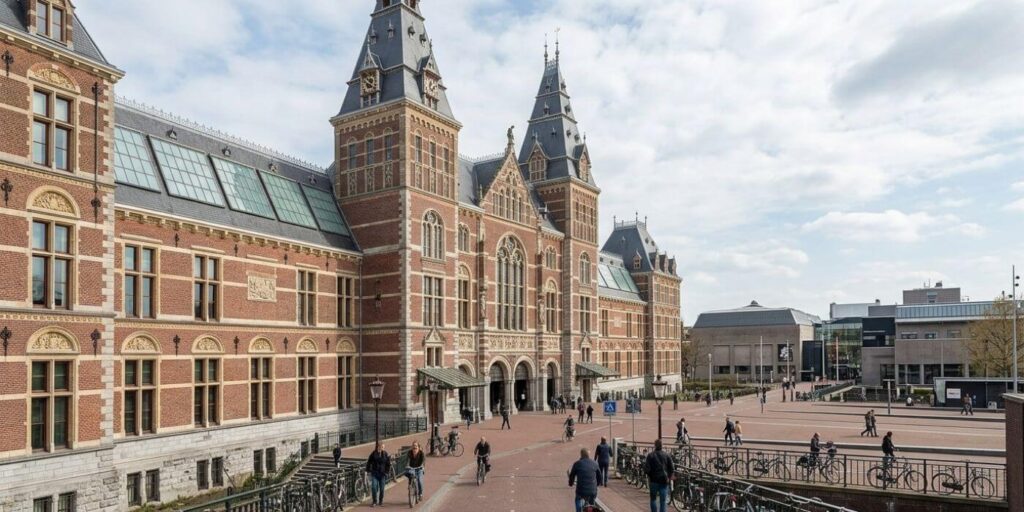
The Rijksmuseum is one of the most important cultural institutions in the Netherlands. It houses an extensive collection of art, historical objects, and artifacts that represent centuries of Dutch history. From the Middle AgesMiddle Ages to modern times, the museum provides a comprehensive overview of the country’s development.
The building itself is known for its stunning architecture, combining Gothic and Renaissance elements. For visitors, it offers a comprehensive way to learn insight into the artistic, political, and social history of the dutch, making it one of the top historical places in Amsterdam Netherlands.
Bloemenmarkt – A Floating Market with Historical Roots
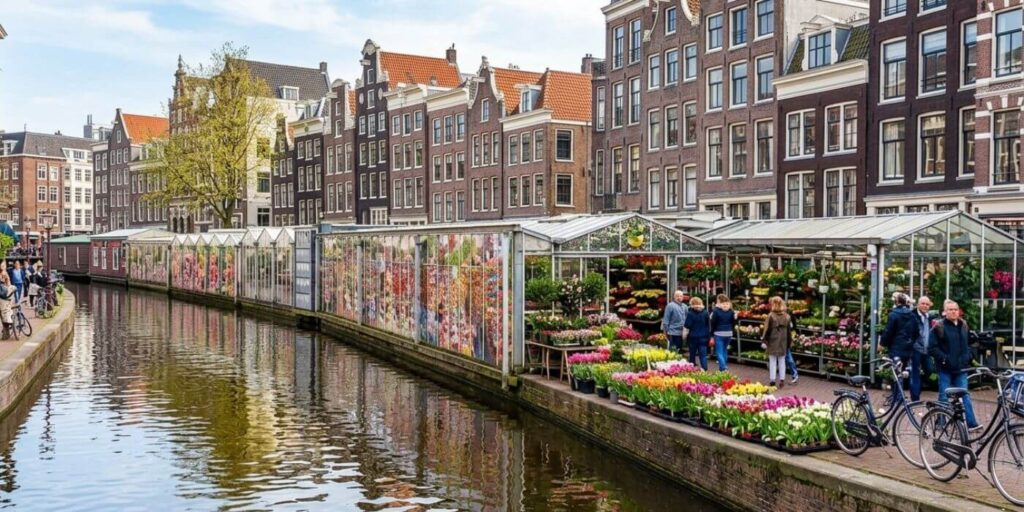
The Bloemenmarkt is a unique floating flower market, established in the 19th century. Located along a canal in central Amsterdam, it reflects the Netherlands’ long tradition of flower trading. Historically, flowers were transported by boat, which is why the market is set on floating platforms.
Although it is often associated with tourism today, it remains tied to the city’s economic and cultural past. Surrounded by restaurants and shops, it offers a lively atmosphere while still representing a traditional aspect of Amsterdam life.
In Short - Amsterdam Historical Landmarks
Exploring these historical places in Amsterdam is not just about sightseeing—it is about understanding how the city centre evolved from the modern European capital. Amsterdam has more than 7,000 officially recognized historical buildings and monuments.
Each site, whether it is the oldest building, new church, monuments, or a canal house, contributes to a deeper understanding of Dutch history. The Night Watch becomes more attractive beside the canals and during the light festival in Amsterdam.
Together, they create a network of Amsterdam landmarks that allow visitors to experience the beauty, complexity, and continuity of the past in a very real way. If you walk through these places with attention, you won’t just see famous landmarks—you’ll begin to understand the story of Amsterdam itself.